
In this guide
Choosing a cremation urn is one of the first decisions families face after a cremation. Whether the urn will rest on a mantelpiece for decades or be interred in a cemetery, it is both a practical container and a lasting tribute. Today the range of available urns is wider than ever — materials, shapes, themes, sizes, and even ecological options have multiplied, and it can feel overwhelming to navigate. This guide walks through everything you need to know: how urns are made, what types exist, how to read capacity specifications, and which questions to ask before making a choice.
What is a cremation urn?
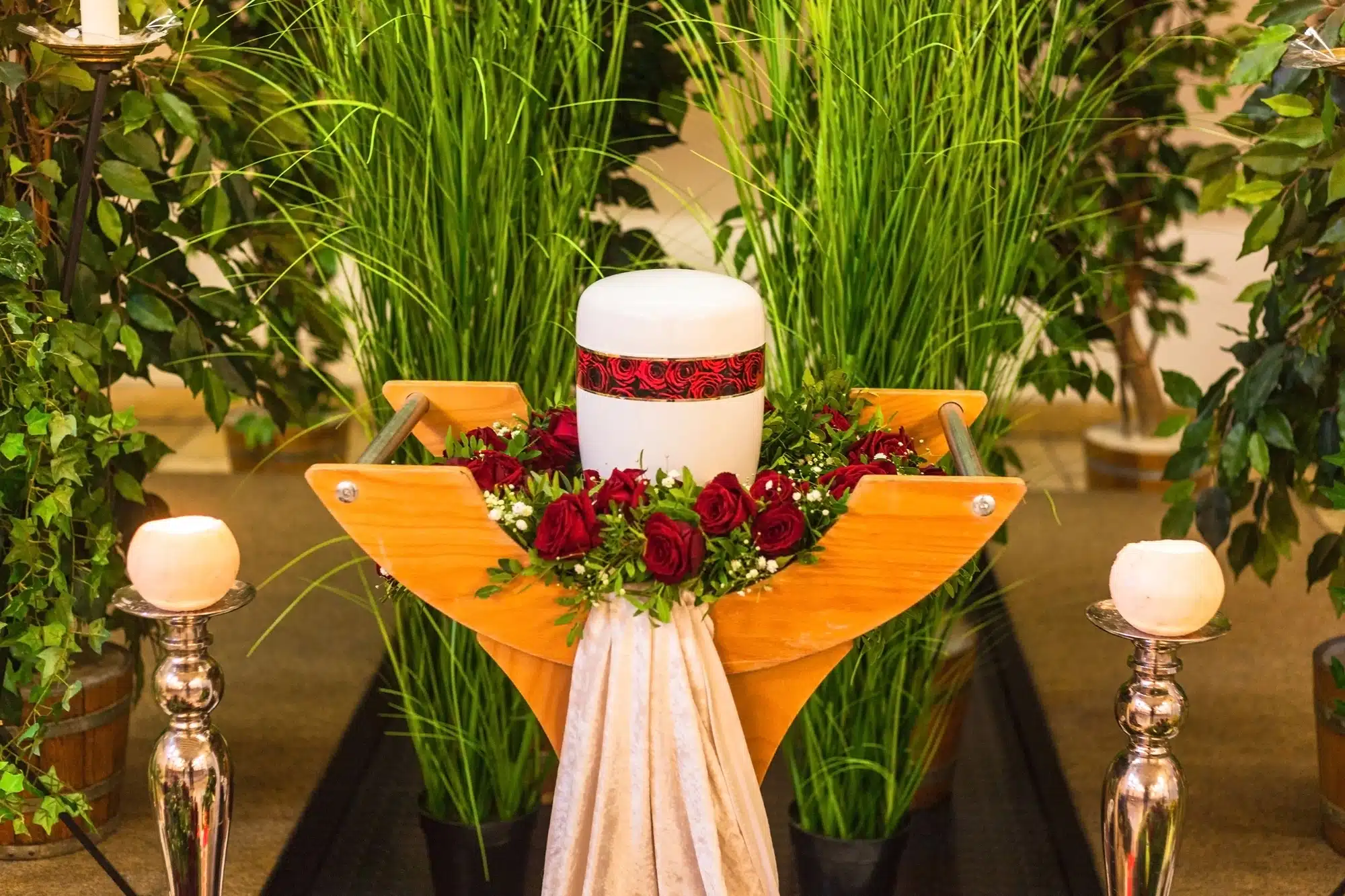
A cremation urn is a container designed to hold the cremated remains — commonly called cremains — of a person or animal after cremation. In practice, an urn serves two distinct functions: it is first and foremost a secure, dignified receptacle for the ashes, and it is also an object that families may live with for many years, displayed at home or placed at a memorial site.
Families generally have two options after receiving the cremains. They may keep the urn at home as a lasting memorial, or they may bury it in a cemetery, a dedicated urn garden, or a natural setting. Some families choose to scatter at least part of the ashes and retain the remainder in a smaller keepsake urn. The choice is personal, and the urn itself should reflect it.
Materials: glass, stone, wood, metal and more
One of the most striking aspects of the modern urn market is the sheer variety of materials available. Cremation urns can be crafted from almost any substance, each carrying its own aesthetic, weight, durability profile, and symbolic resonance.
Metal urns
Brass, bronze, and stainless steel are the most common metals used. They are highly durable, easy to seal, and readily accept engraving or decorative inlays. Metal urns tend to be heavier and are well suited for long-term home display or cemetery interment. Pewter and aluminium are lighter alternatives sometimes chosen for their contemporary appearance.
Wood urns
Hand-turned or carved from hardwoods such as walnut, oak, cherry, or maple, wooden urns have a warm, organic quality that many families find comforting. They are lightweight relative to their size and often feature beautifully crafted joinery. Wood is also one of the more customisable materials, as it accepts laser engraving and inlaid designs with precision.
Stone and marble urns
Stone urns — whether carved from granite, marble, onyx, or soapstone — project permanence and solemnity. Their weight makes them less practical for transport, but their durability makes them an excellent choice for outdoor memorials and cemetery niches. Marble in particular allows for richly detailed hand-carved motifs.
Glass urns
Blown or fused art glass produces some of the most visually striking urns available. Because each piece is handmade, no two are identical. Colours can be layered, swirled, or infused with the ashes themselves to create a truly singular object. Glass urns are best suited to protected indoor display, away from direct sunlight and risk of breakage.
Ceramic and porcelain urns
Fired clay urns have a long cultural history across many civilisations. Contemporary ceramic urns range from rustic, hand-thrown pieces to refined porcelain forms with hand-painted decoration. They offer a good balance between visual appeal and cost.
Main types of cremation urns
Beyond material, urns are also classified by the person or purpose they serve. This categorisation helps families navigate an otherwise enormous catalogue of options.
Adult urns
The standard adult urn is sized to hold the full volume of cremains from an average adult — typically around 170 to 200 cubic centimetres. This is the most common category, and the one for which most designs, materials, and themes are available.
Children’s urns
Urns designed for infants and children are smaller in capacity and often more delicate in their design. They may feature soft motifs — clouds, animals, stars — and are crafted with an awareness of the particular grief that accompanies the loss of a young life.
Pet urns
As pet cremation has grown more common across Europe and North America, so has the range of urns designed specifically for animals. Pet urns come in sizes calibrated for everything from a small cat to a large dog, and often feature paw prints, nature motifs, or breed-specific designs. Capacity requirements vary significantly: a small cat’s cremains occupy far less volume than those of a large dog.
Companion urns
A companion urn — sometimes called a double urn — is designed to hold the cremains of two people together, most often a couple who wished to spend eternity side by side. These urns either have two separate internal chambers or are simply large enough to accommodate the combined volume. They are a meaningful option for spouses, life partners, or family members who shared a close bond.
Themed and symbolic urns
Themed urns are among the most popular choices precisely because they speak to the individual life being honoured. Religious symbolism — crosses, the Star of David, the crescent, the lotus — is frequently incorporated into the design. Veterans’ urns carry insignia of specific military branches and are an important category in countries with strong traditions of military service. Sports-themed, nature-inspired, and occupation-specific urns are equally common. The underlying principle is simple: the urn should tell something true about the person it holds.
Size, capacity, and weight
Understanding urn sizing requires getting comfortable with a few basic figures. The volume of cremains from an average adult is approximately 170 cubic centimetres — roughly the volume of a large grapefruit. Most adult urns are manufactured to hold around 220 cubic centimetres, providing a comfortable margin.
It is worth noting that cremains are not weightless. For an average adult, the combined weight of the urn and its contents will increase by roughly 1.8 to 3 kilograms (4 to 7 pounds) once filled. This matters when choosing an urn that will be transported, carried during a ceremony, or placed on a shelf that must support it.
The weight of the urn itself depends entirely on its material. A glass or wooden urn may weigh less than half a kilogram empty, while a marble urn of similar dimensions could weigh three kilograms or more. Always check the empty weight of the urn alongside its capacity before purchasing, particularly if mobility or placement constraints are a concern.
As a practical rule of thumb: if the deceased weighed around 80 kg, expect approximately 170 cc of cremains. Larger individuals may produce slightly more volume; smaller individuals or children will produce significantly less.
Keepsake urns: sharing the remains
A keepsake urn is a miniature urn designed to hold a small portion of the cremains. They are typically a fraction of the size of a standard urn and are used in two main situations.
The first is when the family wishes to scatter the majority of the ashes — at sea, in a garden, or in a place meaningful to the deceased — while retaining a small amount as a permanent keepsake. The second is when multiple family members wish to each keep a portion. When children or siblings want to share the remains of a parent, for example, keepsake urns allow each branch of the family to have a tangible, personal memorial without requiring the remains to be divided into a single urn.
Keepsake urns are available in virtually every material and style. They are often sold alongside a matching full-size urn so that the family’s collection maintains a visual coherence.
Personalisation: printing, engraving, and custom finishes
Personalisation is what transforms a standard urn into a tribute to a specific person. Today, several techniques make this possible, and the right choice depends on the material of the urn and the result the family is looking for.
Digital printing
Digital printing is the most versatile and widely used method. It allows full-colour images, portraits, patterns, and detailed artwork to be applied directly to the urn surface with precision. It works well on a broad range of materials and is the standard approach for urns that carry photographs or complex decorative motifs.
Engraving
Laser or mechanical rotary engraving cuts directly into the surface of the material. It is particularly suited to metal, stone, and hardwood, and produces a permanent, tactile result. It is less appropriate for glass or certain ceramics, and is generally limited to text, names, dates, or simple line-based designs.
Other options
Further personalisation options include hand-painted motifs applied by artisans, photo-ceramic plaques bonded to the surface, and custom colour glazing for ceramic urns. For families who want something entirely bespoke, some craftspeople also accept commissions based on a photograph or a written brief. Before ordering any personalisation, it is worth confirming which technique the supplier uses and whether it is compatible with the chosen urn material.
Biodegradable urns: a separate category
Biodegradable urns represent a distinct category that sits outside the conventional urn market. Rather than preserving the cremains indefinitely in a sealed container, a biodegradable urn is designed to break down gradually when buried in soil, returning its contents to the earth as part of a natural cycle.
Materials used for biodegradable urns include compressed recycled paper, salt, gelatin, coconut shell, and cork. Each material has a different degradation timeline and a different ecological footprint. Some biodegradable urns are also designed to accommodate a living plant — transforming the burial site into a growing memorial rather than a static monument.
Tree Urn: a cork urn that grows into a tree
The Tree Urn is a biodegradable urn made from cork and a biodegradable binder. It has two physically separate compartments: the lower section holds the cremated ashes, and the upper section is designed to receive a seedling or young plant chosen by the family from a local nursery. Buried in the ground, the urn biodegrades over 6 to 8 years, allowing the roots of the tree to grow downward through the cork into the enriched soil below. The result is a living tree as a permanent, growing tribute.
Frequently asked questions
What size urn do I need for an adult?
For an average adult, a standard urn with a capacity of at least 200 cubic centimetres is sufficient. Most commercially available adult urns hold 220 cubic centimetres or more, which provides an adequate margin. If in doubt, choose slightly larger rather than smaller — cremains cannot be compressed.
Can I keep a cremation urn at home?
In most European countries and in North America, keeping a cremation urn at home is legally permitted. There is no obligation to inter or scatter the remains within a fixed timeframe in most jurisdictions, though local regulations vary. Families should check with their funeral home or local authority if they are uncertain.
How much do cremated remains weigh?
Cremated remains from an average adult typically weigh between 1.5 and 3 kilograms (approximately 4 to 7 pounds). Smaller individuals, including children, will produce a lighter and smaller volume of cremains. The weight depends primarily on the bone density and overall size of the person before cremation.
What is the difference between a standard urn and a keepsake urn?
A standard urn is designed to hold the complete volume of cremains from one individual. A keepsake urn is a miniature version intended to hold only a small portion, used either when the remaining ashes are scattered or when cremains are divided among several family members. Keepsake urns are not a replacement for a standard urn unless the majority of the ashes will be scattered.
Can all urns be personalised?
Most urns can receive some form of personalisation, though the technique depends on the material. Digital printing works on a wide range of surfaces. Laser or rotary engraving suits metal, stone, and hardwood. Some materials such as glass require specialist methods. Always confirm compatibility with the supplier before ordering.
What is a biodegradable urn?
A biodegradable urn is made from materials that break down naturally when buried in soil — such as cork, compressed paper, or salt. Unlike conventional urns, which preserve the remains indefinitely, biodegradable urns are designed to return the ashes to the earth over a period of months to years. Some biodegradable urns also incorporate a space for a living plant, creating a natural memorial as the urn decomposes.
0 Comments