
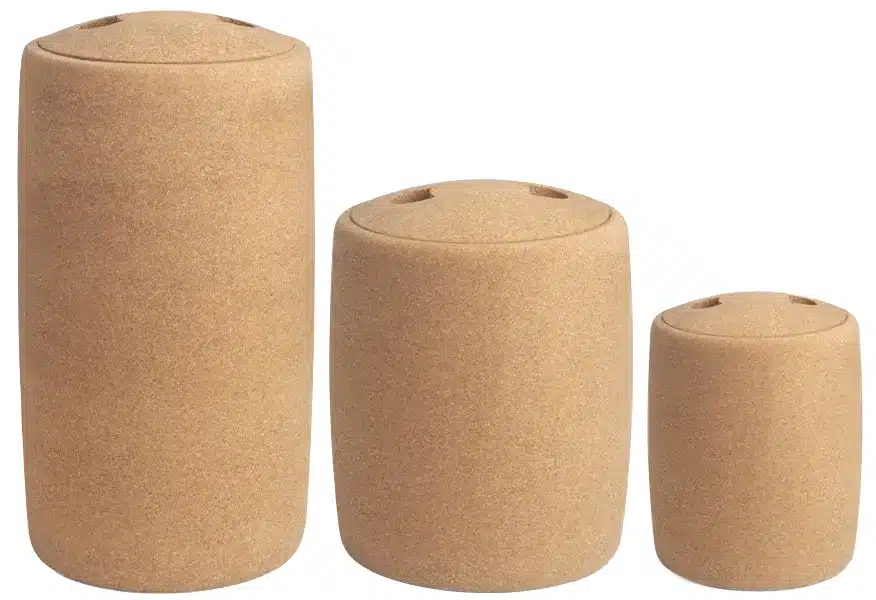
Losing a loved one is a moment of immense sadness, and organizing the funeral is a crucial step in honoring their memory. At the heart of this process, the cremation urn plays a central role. Far more than a simple container, the urn becomes a tangible symbol of remembrance, a place of solace, and an expression of enduring love.
In this guide:
What is a Cremation Urn for Ashes?
A funeral urn, or cremation urn, is a receptacle designed to hold the ashes of a person (or pet) after cremation. Today, urns are available in an incredible diversity of shapes, sizes, materials, and styles, allowing families to find the most fitting and personal tribute.
The Urn’s Role in the Grieving Process
The urn serves not only to contain ashes; it is a focal point for grief and commemoration:
- A Place of Remembrance: Offers a physical space to gather, reflect, and remember.
- A Symbol of Presence: For many, having the urn nearby helps maintain a sense of the loved one’s presence.
- A Legacy Item: The urn can become a precious keepsake passed down through generations.
👉 Learn more: The Importance of Grief in Our Lives
Choosing the Ideal Funeral Urn: Materials and Styles
The choice of material reflects the deceased’s personality or the family’s intentions:
- Traditional Materials: Ceramic, Marble, Granite, and Bronze offer durability and solemnity.
- Natural Cork: Brings warmth and an organic connection to the earth, often preferred for its authenticity.
- Biodegradable Materials: Salt, sand, or recycled paper, designed to return to nature quickly.
- “Tree” Urns: A major innovation where a sapling grows from the ashes, like the TreeUrn.
Choosing the Right Path: Detailed Comparison Table
To help you decide between a permanent tribute or a return to nature, here is a full comparison of the three main types of urns:
| Point of Comparison | Classic Urns (Ceramic / Metal) | Standard Biodegradable Urns | Tree-Urn (Cork, 6–8 years) |
|---|---|---|---|
| 1. Material | Cold, rigid, solid but distant | Plant fibers, sand, paper | Natural cork, warm, soft, organic |
| 2. Durability | Very resistant, does not decompose | Decomposes in 1 week to 12 months | Decomposes slowly in 6–8 years |
| 3. Symbolism | Fixed memory, preservation | Simple return to nature | Renewal: a tree grows from loss |
| 4. Relation to Time | Unchanging, can feel bulky | Disappears quickly | Gradual transformation (grieving time) |
| 5. Aesthetics | Heavy, visible, sometimes imposing | Light, simple, temporary | Elegant, natural, blending in |
| 6. Emotional Comfort | Reminds of absence | Soothing ecological gesture | Offers peace: the tree is a living memory |
👉 Full Comparison Guide: Which urn should you choose?
Where to Place Cremation Urns: Options and Regulations
The destination of the ashes is an important decision governed by local regulations. Here are the most common options:
- Columbarium & Cavurne: Traditional cemetery solutions for permanent urns.
- At Home: Permitted in many countries for personal remembrance.
- Ash Scattering: Possible in nature (sea, forest), subject to specific rules (e.g., distance from shore).
- Private Garden Burial: An increasingly popular option for biodegradable urns and tree urns. In many regions, this is permitted on private property if done respectfully.
- Green Cemeteries: Dedicated natural sites for eco-friendly burials.
👉 European Legislation: Ash Scattering in Europe: Full Overview
Conclusion: A Meaningful Choice
Whether classic or innovative, the cremation urn allows for honoring a loved one’s life in a lasting way. It offers families a means to maintain a connection and find comfort in remembrance.
0 Comments