
There is a knowledge as old as civilisation itself — perfected in Japanese monastery gardens, passed down through generations after the great food crises, and yet completely absent from modern gardening books. Not because it doesn’t work — quite the opposite — but because no one can make money from it. That knowledge is fermented ash.
One cup of wood ash, water, a little molasses, and two to four weeks of patience. What you’ll get is a liquid bio-fertilizer of remarkable effectiveness — capable of transforming exhausted soil into a living, productive ecosystem without spending a single penny on chemical inputs.
“Nature knows no waste. Everything is recycled. Everything has its place in the cycle.”
Why Is Fermented Ash So Powerful?
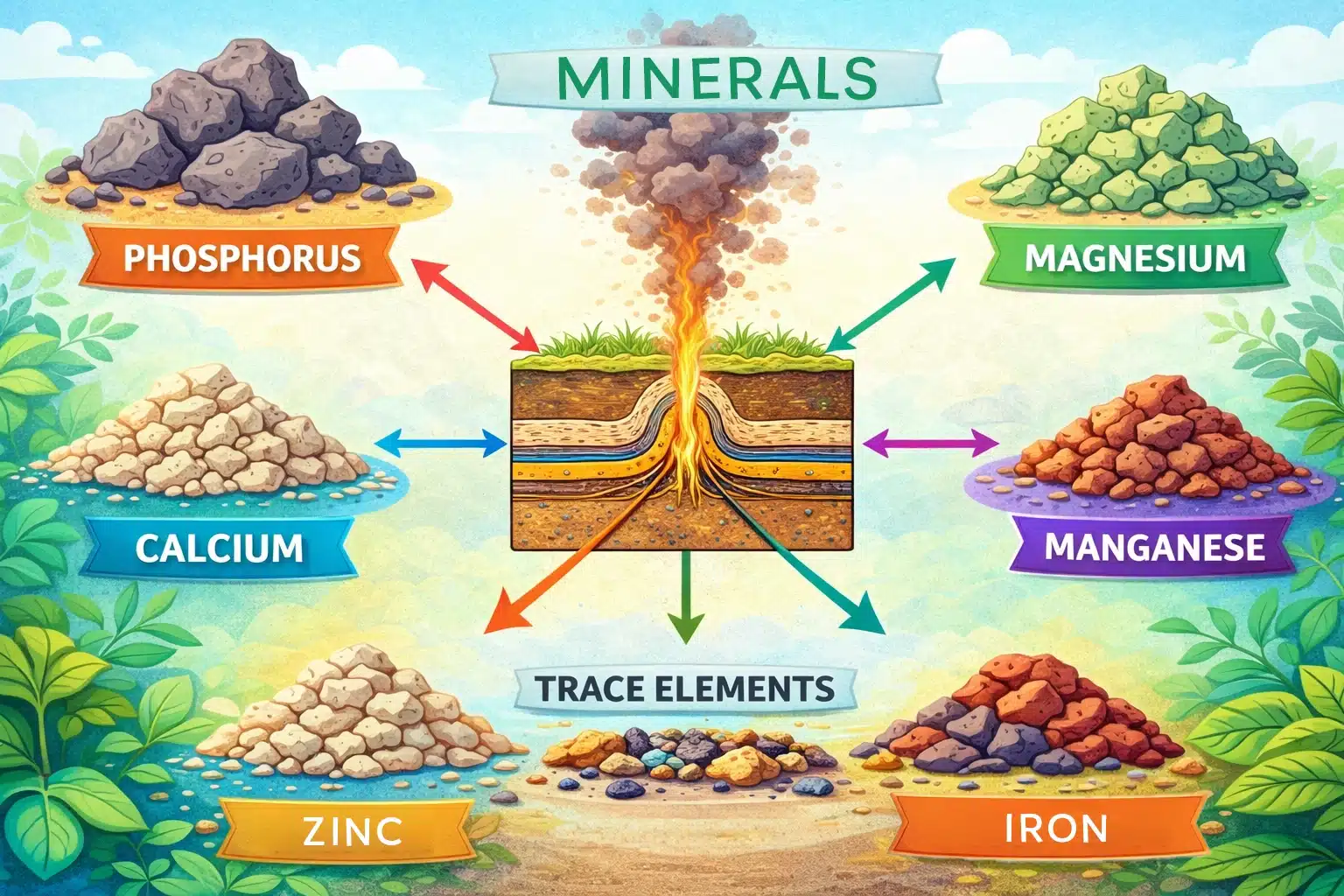
Wood ash, far from being a simple residue, is a concentrated source of essential minerals. Depending on the wood burned, it contains between 5 and 15% potassium, along with phosphorus, calcium, magnesium, and trace elements such as iron, manganese, and zinc — all nutrients vital to plant growth.
However, raw ash sprinkled directly onto the garden can do more harm than good: it is highly alkaline, raises soil pH, and can disrupt the microbial balance. This is where fermentation changes everything. By fermenting ash in water with a sugar source, you trigger the action of micro-organisms naturally present in the water, air, and ash itself. These organisms transform raw minerals into nutrients that are immediately bioavailable to both plants and soil life.
Living Soil vs. Chemical Fertilizer: The Core Difference
Chemical fertilizers feed the plant directly — but slowly kill the soil. Micro-organisms starve, soil life disappears, and the plant becomes entirely dependent on synthetic inputs. It’s like feeding someone exclusively through an IV drip: it works, but it isn’t healthy.
Fermented ash does the opposite. It feeds soil life. Micro-organisms digest the organic compounds, produce humus, improve soil structure, and increase water retention. Plants not only grow faster — they become more resilient against disease, drought, and pests. You are not building a dependent system. You are building a resilient one.
How to Make Fermented Ash
What You Need — for 10 litres of concentrate
- 1 cup of untreated natural wood ash (~250 ml)
- 10 litres of rainwater — or tap water left to sit for 24 hours so the chlorine evaporates
- 1–2 tablespoons of molasses (or brown sugar, or crushed ripe fruit)
- A plastic bucket with a loosely placed lid, or a cloth over the opening
Step-by-Step Process
- Pour the ash into the bucket.
- Add the water and mix thoroughly — the water will turn grey and cloudy.
- Add the molasses and stir again until the mixture is fully homogeneous.
- Cover loosely and place in a warm spot, ideally between 15 and 25 °C (59–77 °F).
- Stir every 3 to 4 days to introduce oxygen and prevent rotting. A light foam on the surface is normal — it means the micro-organisms are at work.
- After 2 to 4 weeks, the liquid should be dark brown to black with a strong, earthy smell. Your fermented ash is ready.
Application: The Golden Rule
Fermented ash is highly concentrated. Never pour it undiluted onto your plants — it will burn the roots. Always dilute in a ratio of 1 part fermented ash to 10–20 parts water. Pour the diluted solution directly onto the soil around the plant, never on the leaves. Repeat every two to four weeks during the main growing season.
Keep in mind: Fermented ash is a powerful tool, but it works best within a healthy system. Continue adding organic matter — compost, mulch, green manures. Do not over-till the soil or leave it permanently bare. Think of fermented ash as a turbocharger for a system already built on sound principles.
Mistakes to Avoid at All Costs
- Too much ash: More than one cup per 10 litres makes the solution too alkaline. Fermentation fails and you end up with a caustic liquid instead of a nutrient-rich fertilizer.
- Treated wood: Painted, pressure-treated, or demolition wood may contain heavy metals and toxic chemicals that pass into the ash and then into your soil.
- Not stirring: Leaving the mixture untouched too long creates anaerobic rot. A foul smell — sulphur or rotten meat — is the warning sign. Discard and start over.
- Applying undiluted: The concentrate will burn and kill roots. Dilute every single time — no exceptions.
A Seasonal Application Guide
🌱 Spring (March–April): First application once soil temperature exceeds 10 °C (50 °F). Stimulates plant awakening and activates dormant microbial life. Do not apply to still-cold soil — nutrients will not be absorbed.
☀️ Summer: Fertilize every two to three weeks for heavy feeders such as tomatoes, squash, and courgettes. In extreme heat, increase dilution to 1:30 and water only in the early morning or late evening to avoid salt stress.
🍂 Autumn (September–October): A final application after harvest stabilises the soil and strengthens microbial life ahead of winter. Follow with a green manure such as winter rye or phacelia to further enrich the soil during the cold season.
❄️ Winter: The garden rests. Use this time to prepare fresh batches and store them in a cool, dark place. Store raw ash in a sealed, airtight container — it is hygroscopic and will absorb moisture and lose effectiveness if left open.
Advanced Techniques & Variants
Enrich the Base Mix
Add freshly chopped nettle leaves — rich in nitrogen, iron, and silica — or comfrey, high in potassium and phosphorus, directly to the fermentation bucket. One tablespoon of Effective Micro-organisms (EM) per 10 litres also accelerates fermentation and improves final quality significantly.
Combine with Compost Tea
Mix equal parts diluted fermented ash and compost tea to combine the minerals of the ash with the living microbiology of the compost. The effect on stagnating plants is remarkable and immediate.
Foliar Feeding
Diluted to 1:50 and sprayed as a fine mist in the early morning or late evening — never in direct sunlight — fermented ash can correct visible deficiencies such as yellowing leaves or stunted growth within a matter of days.
Compost Activator
Pour diluted fermented ash onto a pile that isn’t heating up. Within days, temperature rises, smell improves, and the compost matures faster — particularly useful in autumn with large quantities of fallen leaves.
Slow-Release Granules
Mix the concentrate with rock dust or clay to form a paste. Shape into small balls and dry in the sun. These granules release nutrients gradually over several weeks — a technique rooted in centuries of traditional Japanese agriculture, ideal for fruit trees or potted plants fertilized only once or twice a year.
Tailoring Fermented Ash to Specific Plants
Tomatoes: Add crushed eggshells (a handful per 10 L) to provide the calcium needed to prevent blossom-end rot. If fruits stay green and won’t ripen, this is typically a potassium deficiency — fermented ash corrects it within two weeks.
Potatoes: Use fermented ash alone — never with nitrogen-rich fertilizers like nettle manure. Too much nitrogen produces lush foliage but few tubers. Apply when plants reach around 20 cm and repeat every three weeks until flowering.
Brassicas (broccoli, cauliflower, kale, cabbage): Enrich with dried ground seaweed as a natural source of boron, which these crops need in greater quantities than ash alone typically provides. Seaweed also adds iodine and other beneficial trace elements.
Soft fruits (strawberries, raspberries, blueberries): These prefer acidic soil (pH 5–6). Mix fermented ash 1:1 with coffee grounds before fermenting to lower the pH, or apply only once in spring at a high dilution (1:30) and rely on compost tea for the rest of the season.
Fruit trees (apple, pear, cherry, plum): Apply once annually in spring just before bud break. Pour the diluted solution into small holes dug within the root zone — the area beneath the outermost branches. Over several seasons, fruits become larger, sweeter, and more richly coloured.
Frequently Asked Questions
Can I use charcoal barbecue ash?
No. Charcoal briquettes are typically treated with chemical accelerants toxic to soil organisms. Use only ash from natural, untreated wood.
How soon will I see results?
The first visible changes — darker, more vigorous leaves — typically appear within 7 to 10 days. The full effect builds over weeks and compounds across multiple seasons.
Can I apply too much?
Yes. Over-fertilization is just as harmful as deficiency. Respect the recommended dilutions and application intervals.
How long does it keep?
3 to 6 months stored cool and dark. Produce only what you need for the season to ensure maximum potency.
What if the fermentation goes wrong?
A foul smell (sulphur, rotten meat) or visible mould means the batch is spoiled. Discard, clean the container, and start again — stirring regularly and keeping the temperature between 18 and 25 °C.
Does it work in pots and on balconies?
Absolutely. The principles are the same at any scale. Many urban gardeners grow thriving tomatoes, herbs, and salads on their balconies using fermented ash as their sole fertilizer.
From Ash, Life Is Born
Fermented ash is more than a fertilizer. It is an act of transformation: taking something that appears dead, burned, and useless — and converting it into something that nourishes life. It is simple to make, essentially free, and scalable from a single balcony pot to a half-hectare orchard. Most importantly, it builds soil over the long term rather than depleting it.
Start small. A first batch of 10 litres. Observe, learn, adjust. And if your plants thrive, share this knowledge — that is exactly how it has survived across generations, and how it will continue to do so.
“The real secret is not in a product you buy — it is in knowledge you practise.”
0 Comments