
Many families are seeking green funeral alternatives that honor their loved ones while preserving the planet. From natural burial grounds to innovative ecological urns and mushroom-based decomposition, the options for a sustainable farewell have never been more accessible.
Summary of this guide:
1. Traditional vs. Green Funeral Alternatives
Standard funeral methods often involve embalming fluids, steel-lined caskets, and concrete vaults, all of which prevent natural decomposition. Green funeral alternatives focus on simplicity and biodegradability. The goal is to return the body or ashes to the earth in a way that nourishes the ecosystem instead of polluting it. This shift toward sustainability is driving a revolution in the funeral industry.
2. The Mushroom Coffin: The Loop Living Cocoon™
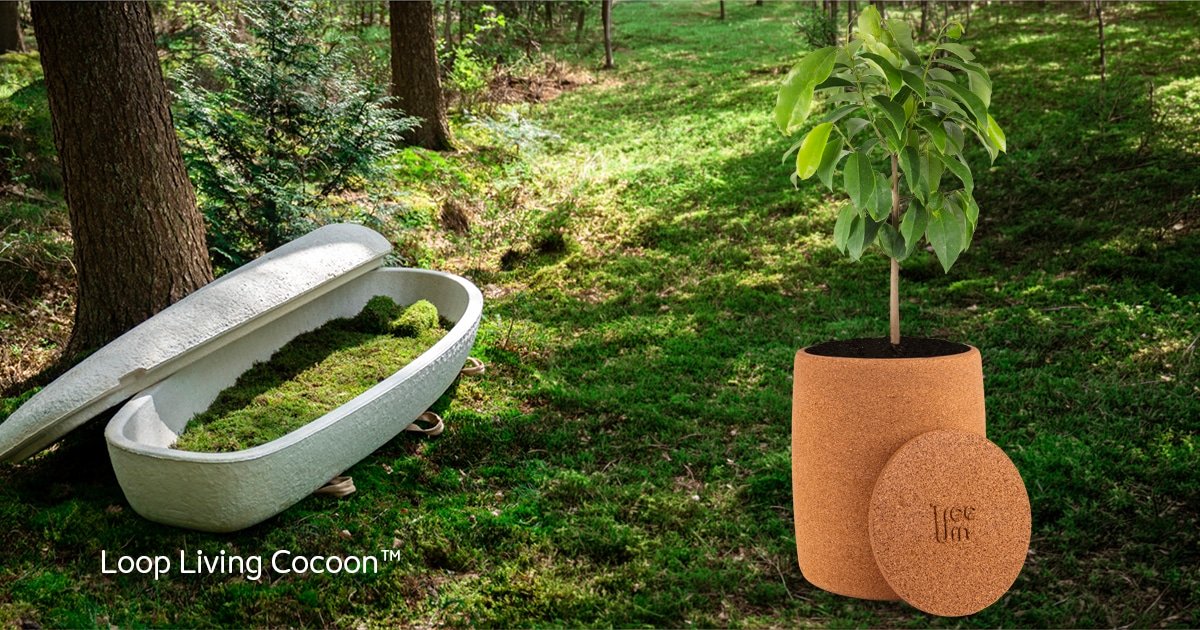
One of the most fascinating green funeral alternatives for body burial is the use of mycelium. The Loop Living Cocoon™ is a mushroom coffin that actively helps the body decompose while enriching the soil. Unlike traditional wood coffins that take decades to break down, this living vessel biodegrades in weeks. It uses the power of mushrooms to neutralize toxins in the body and the soil, turning a human life into a source of new growth for the surrounding environment. Loop Biotech
3. The Tree Urn: A Living Tribute Alternative
For those who choose cremation, the Tree Urn remains the most poetic option among green funeral alternatives. Rather than keeping ashes in a static container, this ecological vessel allows a tree to grow directly from the ashes. It transforms a moment of loss into a cycle of life, creating a living tribute that benefits future generations and local biodiversity. It is a perfect way to let the spirit of a loved one continue through a forest or a private garden.
4. Why Material Choice is Critical for Soil Health
Whether you choose a mushroom coffin or an urn, material choice is critical. Just as the mycelium in a Loop Living Cocoon™ must be alive and functional, the material of an urn must protect the new life it carries. Many biodegradable urns made of salt or cardboard dissolve too quickly, exposing young tree roots to high pH levels. The Tree Urn uses recycled cork, which acts as a natural protective buffer, ensuring the tribute has the best possible chance to thrive.
5. How to Plan a Green Funeral
Planning a sustainable farewell requires a few key steps to ensure compliance with local regulations and environmental standards:
- Choose between full body burial (like a coffin made with mushroom) or cremation with a Tree-Urn.
- Select biodegradable products that support soil regeneration.
- Identify a legal location, such as a natural burial ground, a cinereal forest or a natural forest.
- Consider a service that focuses on nature, simplicity, and a lasting tribute to life.
6. Frequently Asked Questions
- What is the Loop Living Cocoon™?
- It is a coffin made from mycelium (the root structure of mushrooms) that helps the body decompose naturally and enriches the soil.
- Which is better, a coffin made with mushroom or a Biodegradable urn with a tree
- It depends on personal preference. A coffin made from mushroom is for full body burial, while a Tree-Urn is designed for those who choose cremation and want to grow a tree from the ashes.
- Are these green funeral alternatives legal in Europe?
- Yes, but specific statements to the local authorities are often required, especially for burials outside of traditional cemeteries.
- Do mushrooms in the coffin harm the environment?
- On the contrary, the mycelium helps clean the soil by neutralizing toxins, making it one of the cleanest green funeral alternatives available.
Conclusion
Exploring green funeral alternatives like the Loop Living Cocoon™ or the Tree-Urn is a personal journey that aligns our final act with the values of nature. These solutions ensure that our tribute continues to grow and protect the planet, moving away from static monuments and toward a living, breathing legacy.
0 Comments