
In this article
Discover our biodegradable urns →
After cremation, families in Spain face a question that is both practical and deeply personal: what to do with the ashes? The law offers several legitimate options — from a columbarium niche in a cemetery to a private garden, a natural space, or a biodegradable urn with a tree. Each comes with its own conditions and legal requirements.
This guide covers all available options clearly, so families can make an informed choice — with confidence and peace of mind.
“There is no single right answer — only the answer that is right for the person you are honouring, and for those who will carry the memory.”
1. The legal framework: what Spanish law says
In Spain, mortuary health is a shared competence between the central State and the Autonomous Communities. There is no single national law governing ashes — regulation is primarily local, which means conditions vary significantly between municipalities and regions.
The national Mortuary Health Consensus Guide, updated in July 2025, officially recognises the following destinations for ashes:
- Custody by a private individual at home.
- Burial in a cemetery or other authorised funerary structure.
- Burial in authorised ground, including biodegradable urns in designated spaces.
- Scattering in places authorised by municipal or regional rules and applicable environmental law.
The key principle is this: what is permitted in one municipality may be refused in another. Always verify the applicable local rules before making any final decision.
Read our complete guide: Scattering Ashes in Spain — Rules, Options & Urns 2026 →
2. Columbarium: the most common option
The columbarium — a structure of individual niches designed to hold urns — is the most widely used option in Spain following cremation. It is available in virtually every cemetery across the country and offers a legally straightforward, stable, and accessible solution.
Families can visit at any time, and the niche is typically held under a formal concession that guarantees its use for a defined period. For those who want a recognised, permanent place of remembrance within an official funerary setting, this remains the most established choice.
Its main limitation, for many families, is also its defining characteristic: it is a contained, enclosed space — one that does not evolve, grow, or connect with the natural world.
3. In-ground burial in a cemetery
Some Spanish cemeteries allow the in-ground burial of ashes, either in a family grave or in a dedicated area. This option is growing in popularity, particularly in cemeteries that have developed memorial gardens or woodland areas for this purpose.
Before proceeding, it is essential to verify with the cemetery administration whether in-ground burial of ashes is permitted, what type of urn is accepted, and whether specific conditions apply — such as a minimum depth, a designated zone, or restrictions on the type of planting.
One important point: the presence of trees within a cemetery does not automatically mean that burying an urn with a living tree is permitted. Memorial gardens and commemorative plantings are distinct arrangements. Only a written cemetery regulation that explicitly authorises this type of burial is a reliable basis for proceeding.
4. Burying ashes on private land
A private garden, a finca, or a rural property can be a deeply personal and meaningful resting place. In Spain, burying ashes on private land is possible — but it does not happen automatically. Several conditions must be met.
The burial must comply with the regional mortuary health regulations, the municipal ordinances of the relevant Ayuntamiento, and any applicable urban planning or environmental rules. In some municipalities, prior authorisation is required; in others, it is sufficient to verify that no prohibition applies.
It is also important to understand that burying ashes on private land does not create an officially recognised burial site. The location acquires no funerary legal status. If the property is eventually sold, the ashes have no specific legal protection — their future depends on the decisions of the new owner.
5. Burying in natural environments
For families drawn to forests, mountains, or open landscapes as a final resting place, natural spaces can feel like the most fitting choice. Spain’s extraordinary natural diversity — from the humid northern forests to the sun-drenched southern sierras — makes this an emotionally compelling option.
Legally, however, it is the most complex route. The permissibility of burial in a natural space depends on whether the land is public or privately owned, any environmental protections that apply, and the specific ordinances of the local municipality. In national parks and protected natural areas, burial is generally subject to prior authorisation from the relevant regional authority.
Without explicit written authorisation, burying ashes in a natural space must be considered uncertain or potentially non-compliant. Fines may apply. For families who want the experience of a natural burial with full legal security, dedicated memorial forests — operated by professional organisations with all necessary authorisations — offer the best of both worlds.
6. Tree Urn: a biodegradable and living alternative
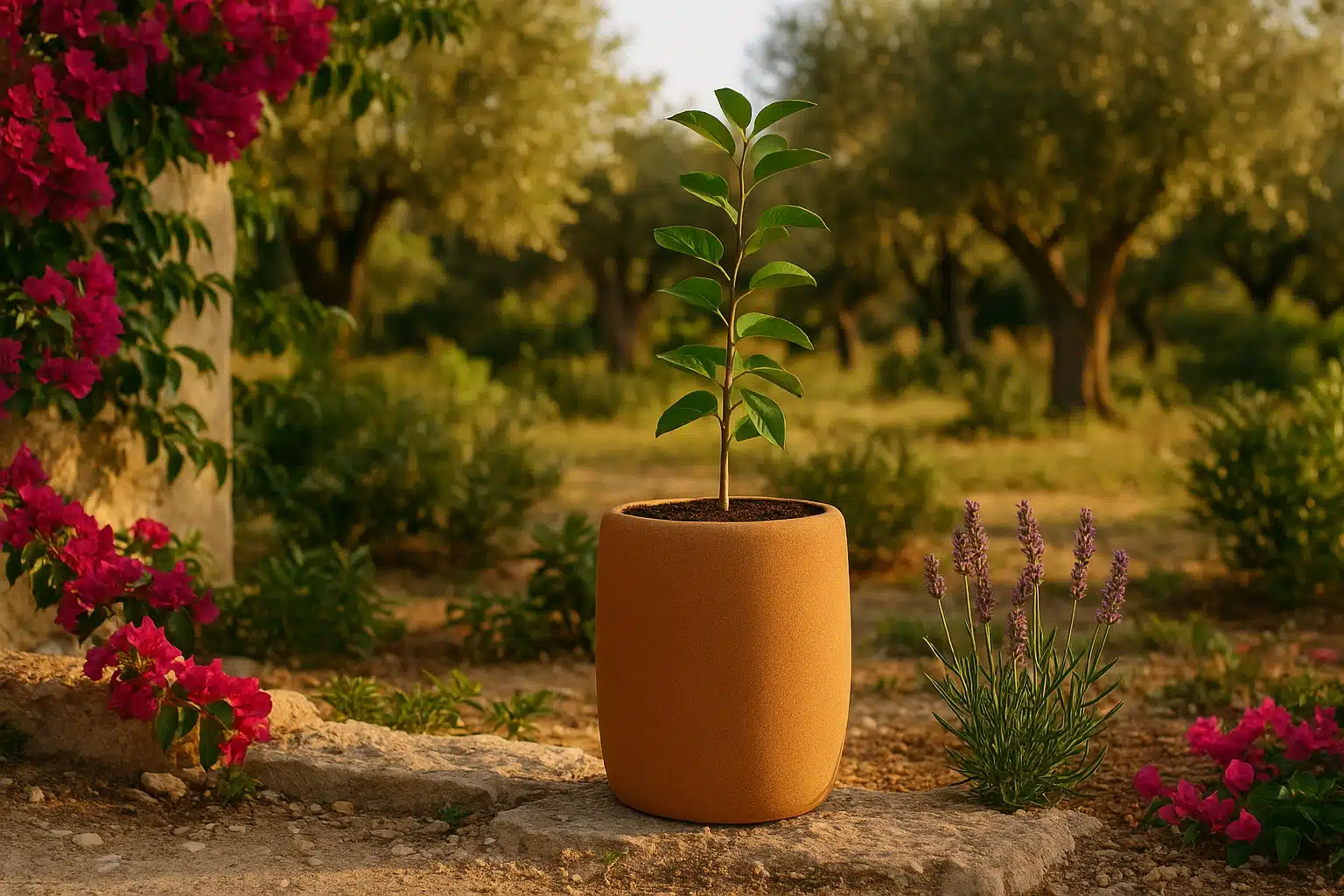
Beyond the traditional options, a growing number of families in Spain are choosing a different path: a biodegradable tree urn. Rather than a closed niche or a fixed grave, the ashes become part of a living tree — a memorial that grows, changes with the seasons, and endures for decades.
The Tree Urn is made from natural cork and fully biodegradable materials. Buried in the ground with a young tree or plant chosen from a local nursery, it gradually decomposes over approximately 6 to 8 years — releasing the ashes progressively, moderating their alkalinity, and nourishing the developing root system. Nothing remains in the soil but the tree itself.
Under Spanish law, this practice is generally considered a form of scattering rather than permanent burial, given the biodegradable nature of the urn and the progressive return of the ashes to the earth.
A Tree Urn can be planted in a private garden, in a dedicated memorial forest, or even in a large pot on a balcony — making it a flexible option that adapts to the family’s situation, wherever they are.
“A tree does not mark the end of a life. It continues it — quietly, season after season, for as long as the roots hold.”
Read our guide: Where to bury a Tree Urn in Spain — gardens, forests & memorial sites →
7. How to proceed: a simple step-by-step guide
Step 1 — Choose your location type
Decide whether you are considering a cemetery, private land, a natural space, or a memorial forest. Each follows a distinct regulatory path and carries different practical implications.
Step 2 — Verify the applicable local rules
Contact the cemetery administration, the local Ayuntamiento, or the relevant environmental authority. Ask specifically whether in-ground burial of ashes is permitted and under what conditions.
Step 3 — Obtain written confirmation
Always secure official written validation before proceeding. Verbal assurances are not sufficient and provide no legal protection. A written confirmation is the only reliable guarantee.
8. Frequently asked questions
Is burying ashes legal in Spain?
Yes, in officially authorised locations. Spain’s national guidance recognises several legal destinations for ashes, but the specific conditions are set locally by municipalities and Autonomous Communities.
What is the safest legal option?
A cemetery that explicitly permits in-ground burial of ashes. Always obtain written confirmation from the cemetery administration before proceeding.
Can I bury ashes in my private garden in Spain?
Sometimes yes, but only if the local municipality does not prohibit it and the applicable regional regulations are respected. Always verify with your Ayuntamiento first.
Does burying ashes on private land create an official grave?
No. The location acquires no funerary legal status. If the property is sold, the ashes have no specific legal protection.
Is a biodegradable tree urn considered burial or scattering under Spanish law?
Generally scattering. A biodegradable urn that decomposes progressively in soil and releases ashes gradually is treated as a form of scattering rather than permanent burial under Spain’s current regulatory framework.
Can I bury ashes in a forest or natural space in Spain?
Only with explicit authorisation from the relevant authority. Without it, this option is uncertain or potentially non-compliant. Dedicated memorial forests with full legal authorisation are the safest alternative for families drawn to a natural setting.
Can a Tree Urn be planted in a pot at home?
Yes. A large planter with good drainage allows the memorial to remain close to home, on a balcony or terrace, while fully respecting ecological principles.
0 Comments